Showing posts with label Wood. Show all posts

Tuesday, April 3, 2007

Three Kings:


Drew Miller in his article about the movie Three Kings which appeared in Stylus Magazine, argues that the movie is both visually amazing and accompanied with great writing. "The slew of quick, almost jarring camera zooms silently convey the tension of armed combat. Oft-used upshots give viewers a sense of the largeness of the land (and the accompanying void its protagonists find themselves in)," Miller says. The music within the movie, a mixture of pop, rock and Middle Eastern, adds more depth to the plot and characters as well.

However Miller says that despite the amazing look Three Kings has, the writing stands above all. Miller says that Russell does an amazing job intertwining both funny one-liners with deep messages and ideas. Miller says, "Russell admirably achieves that which most other directors of war pics fail at doing, namely creating a believable, character-driven fiction within the constructs of a place-driven historical event."

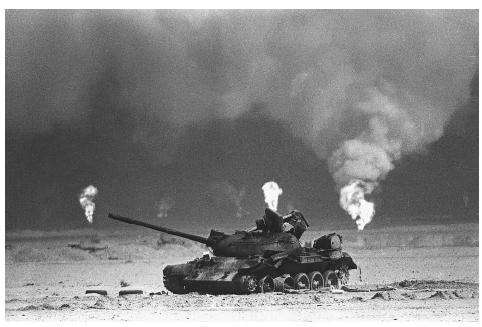
Iraq: Post Gulf War


The Gulf War ended officially on 28 February 1991. It was known to the American military as "Operation Desert Storm." One of the largest controversies surrounding the end of the war, and is even touched on in David Russel's Three Kings, was the call by The United States of America to rebel against Saddam. They promised military help and support if they were to start a coup. However, when those disenfranchised citizens did rise up against Saddam both in the North and South, the US did not aid them and they were brutally and quickly defeated.

This betrayal of word cost many Iraqi lives and trust. In the current war against Iraq, many citizens are wary of The United State's commitment and motives.

Rashomon: Gate of the Dragon


In the link provided, Ivana Redwine gives a review of Rashomon, another film by Akira Kurosawa. In this film, authorities attempt to discover the truth about a recent murder. However, all three witnesses (including the murdered Samurai) all tell different stories about what happened, each trying to make themselves look better. Redwine says that to her the story is "about how differently people perceive the same external event." Akira tells a tale about human nature and their problems. The first scene shows Rashomon (a gate in Kyoto) destroyed with debris and dead men everywhere. It is Akira's metaphor for the story as a whole. Of course the story doesn't only deal with the fall backs of humans but ends in an inspiring fashion. Rashomon has been claimed to be the one of the best Japanese films of all time and is widely known and popular.

Friday, March 16, 2007

Post-Occupation Japan


Ran, directed by Akira Kurosawa, was filmed in 1985. This period in Japanese History is known as Post-Occupation since the American occupation had recently ended in 1952. The article from Wikipedia explains that by the 1980's, the Japanese economy became incredibly strong again, and was a main contender with the USA, causing a strained relationship. Japan had also become a major supplier of arms to the United Nations during the Korean War and despite its agreement never to have an army again since WWII, Japan had built a Self-Defense Force. This was with strong encouragement from the United States due to the growing tensions of the Cold War with The Soviet Union. The period, though prosperous for Japan, is marked with increasing tensions between many different nations.

Monday, March 5, 2007

Music in The Royal Tenenbaums


In this critical essay found on www.senesesofcinema.com, Carole Piechota argues that the music in mise en scène naturally takes over the other elements. In The Royal Tenenbaums, she says, the feelings for the siblings Margot and Richie are best described and transferred to each other and the audience via popular music. "The most sophisticated articulation of Richie’s and Margot’s grief and longing are expressed through the lyrical content, instrumentation and associated imagery of three specific songs," says Piechota. Ultimately, music not only transfers their emotions, but "absolves" them.

Monday, February 19, 2007

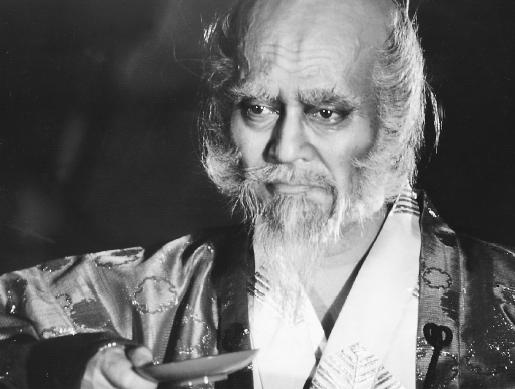
Death in Kurosawa's "Ran"


In this critical article, Zvika Serper argues that Kurosawa, the director of Ran, depicts the murders of two characters in a contrasting but yet harmonious way. Lady Sue, who is beheaded by the agents of Kaede, is innocent and is therefore presented in an honorable fashion according to Japanese theater. Kaede on the other hand has destroyed the house of Ichimonji and killed Lady Sue and therefore is beheaded ruthlessly the scene following Lady Sue's death. Kaede's death however is presented in a dishonorable fashion with blood spurting and taking up the scene. Serper concludes that the depiction of death in Ran allows the movie to represent Japanese theater and culture.

Sunday, February 11, 2007

"I am gonna kill Bill!" A Critical Look


In this critical look at Quentin Tarantino's movie, "Kill Bill, Vol. 2," Gary Johnson finds a simplistic theme in the movie best summed up by the title of the movie. In the second installment, The Bride, as her character is known, goes after the other half of assassins who killed her fiancé and left her for dead. Her ultimate goal is revenge against Bill, the man responsible. Johnson says that Tarantino's abilities lie in his contradictions, "to value carnage in one scene and to value the spoken word in the next." Making the movie special, Johnson says, is his unique camera angles, images and overly simplistic plot, though the characters become more developed. For more information the link above is will connect you to Johnson's article on Imagesjournal.com.

Tuesday, January 23, 2007

Donnie Darko: "Why Are You Wearing That Stupid Man Suit?"


Donnie Darko, directed by Richard Kelly, was not a success at the box office when it was first released in the beginning of 2001, however today it is widely accept as an American cult classic. The story follows Donnie (Jake Gyllenhaal) a confused teenager in 1988 who becomes a victim of his own destiny after a mysterious airplane engine crashes into his room. Donnie is also haunted by a strange, six-foot tall bunny, Frank, who tells him that the world will end in "28 days, 6 hours, 42 minutes and 12 seconds."

The movie is a very complex and hard to understand. There exist many websites and blogs on the internet that attempt to explain and theorize what every aspect means though I have included the Wikipedia article, which also includes Kelly's own interpretation.

Every living creature on this earth dies alone.